
Ancient Hawaiian Sacred Grounds: Puukohola Heiau National Historic Site Revealed


Deep within the heart of the Pacific lies a hidden gem, where ancient secrets whisper through the warm tropical breeze, beckoning you to explore its mysteries.
Hawaii's Puukohola Heiau National Historic Site is a testament to the rich cultural and spiritual heritage of the native Hawaiian people, as it stands proudly atop a hill along the scenic Kohala coastline.
This sacred site is more than just an archaeological marvel; it's an invitation to connect with our roots and experience a sense of freedom that only comes from embracing our planet's storied past.
As you wander through this hallowed ground, you'll be transported back in time to an era when powerful chiefs and skilled navigators ruled these islands, their lives intricately intertwined with the land and sea that sustained them.
The Puukohola Heiau was not only a place for worship but also a ceremonial center where pivotal events unfolded events that forever shaped the course of history in this remote corner of paradise.
And now, modern researchers are unraveling these ancient tales one stone at a time, revealing new insights into Hawaii's fascinating past while awakening in many an innate yearning for freedom that can only be satisfied by exploring life's great unknowns.
Key Takeaway
The Puukohola Heiau National Historic Site is an ancient Hawaiian sacred ground that holds immense historical and cultural significance. This article delves into the intricacies of Hawaiian culture, the architectural features of the site, and the rituals and practices of ancient Hawaiians. It also highlights the ongoing preservation and conservation efforts to maintain the site's integrity while discussing its cultural significance and local legends associated with it. Furthermore, the article provides information on visitor accessibility, Hawaiian language and place names, and modern-day interpretations of the site.
Ancient Hawaiian sacred grounds, like Puukohola Heiau, offer a unique glimpse into the cultural and spiritual practices of a civilization that has been shaped by the island's rich history. By exploring the site's legends, rituals, and architectural features, one can gain a deeper understanding and appreciation of the rich and complex Hawaiian culture that has persevered through time.
Recommended Action
Don't miss out on exploring Hawaii's rich history during your vacation! Discover more amazing historic sites to add to your itinerary and make the most of your Hawaiian getaway.

Overview Of Hawaiian Culture
The Hawaiian culture, rich in traditional beliefs and spiritual values, has long captivated the minds of those who yearn for a deeper understanding of their own roots.
Ancestor worship played an essential role in ancient Hawaiian society, with hula dancing serving as a means to honor and remember the stories of their royal lineage.
Such practices allowed Hawaiians to preserve their history and maintain a strong connection to their ancestors, providing them with guidance through life's challenges.
Dive deeper into the sacred grounds of Pu'ukohol Heiau National Historic Site, and we will uncover the historical significance that lies within this powerful symbol of Hawaii's storied past.
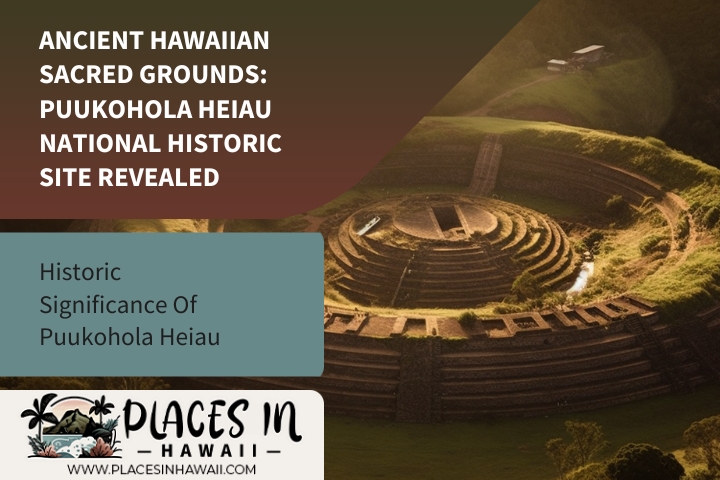
Historical Significance Of Puukohola Heiau
The historical significance of Puukohola Heiau cannot be overstated, as it stands as a testament to the rich cultural heritage and spiritual importance of ancient Hawaiian society. Indeed, oral history recounts that Kamehameha the Great constructed this sacred temple in 17901791, fulfilling a prophecy that would ultimately lead to his unification of the Hawaiian Islands.
Today, visitors can still witness the power and majesty of this sacred site, which continues to play a vital role in preserving the cultural practices and traditions of the native Hawaiian people. To truly appreciate its impact on both past and present generations, consider several key aspects:
- The Surrounding Vegetation: The lush greenery that envelops Puukohola Heiau provides a serene and secluded setting for reflection and contemplation.
- Oral History:Stories passed down through generations serve as a living connection between modern Hawaiians and their ancestors who once inhabited these sacred grounds.
- Cultural Practices:Traditional ceremonies held at Puukohola Heiau reinforce the enduring connection between land, culture, and people.
- Sacred Ceremonies:Various rituals continue to be performed at this holy site today, ensuring that ancient wisdom is preserved for future generations.
- Spiritual Significance:Believed to have been built atop an older heiau (temple), Puukohola Heiau holds immense spiritual importance for native Hawaiians.
As you delve further into our exploration of Puukohola Heiau National Historic Site, it becomes clear that understanding its architectural features will only add to your appreciation of this extraordinary place. Turn your attention toward uncovering the intricacies that make up its remarkable design.

Architectural Features Of The Site
Some may think that ancient Hawaiian architecture was simplistic and primitive, but in reality, it held a great deal of architectural symbolism and cultural context. Puukohol Heiau National Historic Site is an excellent example of this complexity, as the site incorporates various architectural features that reflect both the spiritual significance and resource utilization of the time.
Construction Materials:
The use of materials such as lava rock, coral, and wooden beams highlight the ancient Hawaiians' ability to adapt and utilize their environment for construction purposes. Furthermore, these materials were not chosen randomly; they carried spiritual meanings that were essential to the sacredness of the site.
Architectural Features:
Dry stacking, altars, and terraces were some of the architectural features incorporated into the site. These features were not only functional but also carried symbolic and spiritual meanings that were significant to the ancient Hawaiians.
Cultural Context:
The incorporation of these architectural features into the site reflected the cultural and social practices of the ancient Hawaiians. For instance, the use of dry stacking and wooden beams highlighted the importance of strength and unity, while the altars and terraces exemplified the spiritual and social hierarchy of the time.
Next up, we will uncover more about its unique features and how they exemplify rituals and practices performed by ancient Hawaiians.

Rituals And Practices Of Ancient Hawaiians
Delving into the spiritual beliefs of ancient Hawaiians, one finds a rich tapestry of gods worshiped and ancestral deities revered. Traditional chants or "mele" were integral to their sacred ceremonies, serving as a means to connect with these divine beings and invoke their blessings. It's no surprise then that the Puukohola Heiau national historic site holds such significance for modern-day Hawaiians seeking a connection to their past.
Next up, you'll learn of the preservation and conservation efforts that ensure this vital link to ancient Hawaiian culture endures for future generations.
Preservation And Conservation Efforts
Ironically, it is often the case that the very efforts to protect ancient sacred grounds can inadvertently cause harm. This unfortunate reality makes the preservation and conservation of Pu'ukohol Heiau National Historic Site even more crucial.
Conservation laws are in place to minimize environmental impact and ensure sustainable development, while archaeological research seeks to uncover the secrets of this ancient site without causing further damage.
Cultural awareness plays a significant role in these efforts, as understanding and respecting Hawaiian traditions and beliefs is essential for effective preservation.
Striking a balance between accessibility and protection is an ongoing challenge, but one that must be met to safeguard this sacred space for future generations.
With this foundation laid, we now delve deeper into the cultural significance of Pu'ukohol Heiau, shedding light on why its continued existence holds such profound importance for Hawaiians and others alike.
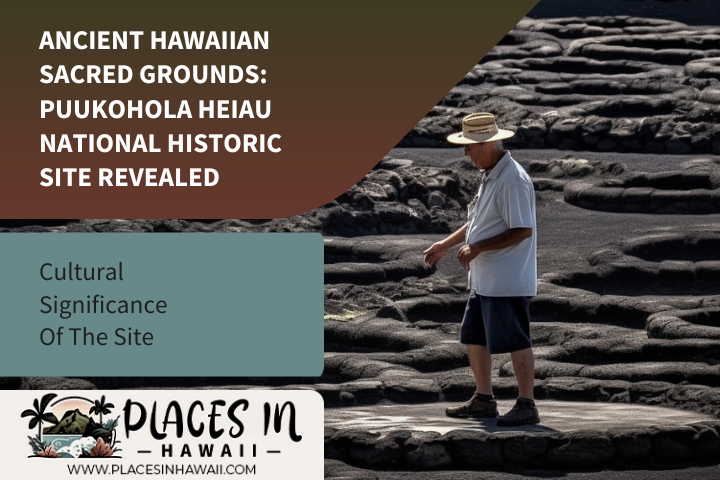
Cultural Significance Of The Site
To acknowledge the tireless efforts to preserve and conserve Pu'ukohola Heiau National Historic Site, It is equally important to delve into the cultural significance that makes this ancient Hawaiian sacred ground truly remarkable to acknowledge the tireless efforts to preserve and conserve Pu'ukohola Heiau National Historic Site. The site carries immense weight in terms of cultural symbolism and traditional values, serving as a living testament to the rich history and spiritual practices of native Hawaiians.
Cultural Symbolism: Pu'ukohola Heiau was constructed by King Kamehameha I as an offering to his war god, Kk'ilimoku. It symbolizes the unification of the Hawaiian Islands under one ruler and continues to hold great cultural significance in modern Hawaii.
Traditional Values: This sacred site embodies key traditional Hawaiian values such as aloha 'aina (love for the land), malama 'aina (land stewardship), and kuleana (responsibility). By preserving this historic site, these essential principles that continue to guide Hawaiians today are honored.
Spiritual Practices: The heiau served as a place for religious ceremonies and rituals, highlighting the importance of spiritual practices in ancient Hawaiian society. These practices also influenced gender roles within their communities, with men primarily responsible for constructing and maintaining heiaus while women participated in various rituals.
The cultural relevance of Pu'ukohola Heiau National Historic Site provides a tangible connection to ancient Hawaii's past for both visitors and locals alike, ensuring that future generations can appreciate this unique heritage.
As you start exploring accessibility and visitor information at this monumental site, remember its profound impact on Hawaiian culture and history.

Accessibility And Visitor Information
Despite the ancient and sacred nature of Puukohol Heiau National Historic Site, it is important to acknowledge that accessibility laws have been implemented to ensure a welcoming experience for all visitors.
A variety of visitor amenities are available on-site, including wheelchair-accessible pathways and facilities, allowing everyone the opportunity to explore this important piece of Hawaiian history while gaining valuable cultural understanding.
Local resources are also in place to assist visitors with any mobility challenges, ensuring a seamless experience while traversing the sacred grounds.
To further enhance one's visit, tour guidance is provided by knowledgeable park rangers who offer profound insight into the historical and cultural significance of Puukohol Heiau.
This immersive experience allows guests to connect with ancient Hawaiian traditions on a deeper level, ultimately satisfying their innate desire for freedom and connection with our shared human past.
As you continue your journey through these spiritual grounds, prepare to delve into the captivating world of local legends and myths that add an additional layer of mystique to this already awe-inspiring site.
Local Legends And Myths
One intriguing theory worth investigating is whether the mysticism of gods in traditional Hawaiian beliefs played a significant role in shaping the spiritual traditions and practices at Pu'ukohol Heiau. The sacred grounds, steeped in ancient rituals, ancestor worship, and cultural customs, provide a fertile landscape for legends and myths to flourish.
Local lore whispers stories of powerful gods and their ties to these revered sites, further enriching the sense of wonder that permeates the area. As you learn more about these myths and legends, one can't help but feel a connection to the rich history that shaped Hawaii's past.
Now, turn your attention to the significance of the Hawaiian language and place names in understanding these ancient sacred grounds.
Hawaiian Language And Place Names
To truly appreciate the cultural symbolism and spiritual practices associated with Pu'ukohol Heiau, it is essential to understand the linguistic aspects of the Hawaiian language and place names.
The rich oral histories and traditional beliefs passed down from generation to generation are deeply intertwined with the naming of these sacred sites, reflecting their significance in ancient Hawaiian society.
The study of the Hawaiian language and place names offers valuable insights into the traditional beliefs and spiritual practices that were integral to the ancient Hawaiians' way of life.
By delving deeper into the meanings behind these names, one can begin to unravel the complex tapestry of their cultural symbolism, ultimately finding a connection between past and present.
You are now prepared to explore modern-day interpretations of the site, capturing its timeless essence while respecting its historical roots.
Modern-Day Interpretations Of The Site
In recent years, the Pu'ukohola Heiau National Historic Site has become a vital location for intercultural exchange and traditional education. Modern-day ceremonies held at the site not only honor the past but also serve as an avenue for spiritual healing, allowing visitors to reconnect with their cultural identity and experience a profound sense of freedom.
As individuals from around the world come together at this sacred ground, they are reminded of our shared human experience and the importance of preserving these ancient places.
By engaging in meaningful conversations and participating in cultural practices, we can aspire to create a future where respect, understanding, and freedom are universal values cherished by all.

Frequently Asked Questions
What Specific Role Did Puukohola Heiau Play In The Unification Of The Hawaiian Islands, And How Did It Influence The Political Landscape At The Time?
Imagine a tapestry woven with threads of spiritual power, political ambition, and the intricate patterns of cultural heritage. The Puukohola Heiau, an ancient Hawaiian sacred ground, is such a tapestry that it played a pivotal role in the unification of the Hawaiian Islands.
Through sacrificial offerings to the gods worshiped there, its spiritual significance was greatly amplified, which, in turn, influenced the political landscape at the time.
According to oral traditions passed down through generations, it was at this very site that King Kamehameha I forged powerful political alliances by inviting rival chiefs to participate in elaborate ceremonies and rituals dedicated to the war god Kk'ilimoku.
This show of unity and submission to divine will laid the foundation for consolidating power across the islands, ultimately bringing them under one rule. Many can't help but feel a subconscious yearning for freedom from strife and conflict that must have inspired those ancient Hawaiians as they sought peace through unification under their revered leader.
So come along on this journey through time and explore the fascinating story behind Puukohola Heiau's role in shaping Hawaii's destiny.
Were There Any Unique Or Distinctive Ceremonies Or Rituals Performed At Puukohola Heiau That Were Not Commonly Practiced At Other Heiaus In Ancient Hawaii?
At Pu'ukohola Heiau, there were indeed distinctive ceremonies and rituals that set it apart from other heiaus in ancient Hawaii.
Among these unique practices were the sacrificial rites performed at this site, which involved offerings to the gods, such as animals or even humans, to ensure victory in war and political power.
The religious practices at Pu'ukohola Heiau also featured material sourced from different islands, demonstrating the interconnected nature of ancient Hawaiian society and the importance of this sacred space.
Archaeological discoveries at Pu'ukohola Heiau have provided valuable insight into these exclusive ceremonies and rituals, further highlighting their cultural reverence among Hawaiians.
Dive deeper, and people are reminded of their innate desire for freedom and how essential it is to preserve such historical sites that embody their rich cultural heritage.
How Did The Ancient Hawaiians Source The Materials Needed For The Construction Of Puukohola Heiau, And What Challenges Did They Face During The Building Process?
In their quest to create the monumental Pu'ukohola Heiau, the ancient Hawaiians employed ingenious sourcing methods and construction techniques that required tremendous effort and collaboration.
Archaeological evidence suggests that they transported massive stones from Pololu Valley, navigating through challenging terrain and traversing vast distances.
As they faced these daunting tasks, the builders found unity in their shared purpose, fostering camaraderie among diverse groups.
Political effects were felt as alliances were forged during the construction process, ultimately culminating in unique ceremonies held at this sacred site to solidify power structures.
The extraordinary feats accomplished by these ancient Hawaiians continue to captivate modern audiences as they marvel at their unwavering determination and yearning for spiritual freedom embodied within the walls of Pu'ukohola Heiau.
Have There Been Any Archaeological Findings At Puukohola Heiau That Provide Further Insight Into The Lives And Beliefs Of The Ancient Hawaiians Who Utilized The Site?
Imagine stumbling upon a treasure trove of ancient artifacts, each one offering a glimpse into a rich and complex past. Archaeological findings at Pu'ukohola Heiau have done just that, shedding light on the lives and beliefs of the ancient Hawaiians who utilized this sacred site.
Resource gathering played a crucial role in their society, as evidenced by the discoveries of tools and materials used for construction and daily living. The unearthed relics also offer insight into their religious practices and the spiritual significance of the site, reflecting the importance of maintaining the balance between nature, gods, and humans.
Additionally, findings suggest that social hierarchy was central to their culture, with elites participating in ceremonies held at Pu'ukohola Heiau to maintain order and ensure prosperity. Interestingly, some artifacts point toward cultural exchange with other Polynesian islands, hinting at a network of trade and communication across vast ocean distances.
When we explore these archaeological clues, we gain not only knowledge about our ancestors but also an appreciation for the freedom to pursue our own beliefs and connections in today's world.
How Do The Local Community And Native Hawaiians Today View The Site Of Puukohola Heiau In Terms Of Its Cultural And Historical Importance, And What Efforts Have Been Made To Involve Them In The Preservation And Interpretation Of The Site?
Today, the site of Pu'ukohola Heiau holds immense cultural and historical importance for the local community and Native Hawaiians. They see it as a vital link to their traditional beliefs, appreciating its spiritual significance and the deep-rooted cultural connections it fosters.
To ensure the preservation and interpretation of this sacred site, Community involvement is actively encouraged through various conservation efforts to ensure the preservation and interpretation of this sacred site. Collaborative initiatives between Native Hawaiian organizations, individuals, and government entities work together to maintain the integrity of Pu'ukohola Heiau, allowing present and future generations to experience the powerful sense of freedom that comes from connecting with their ancestral heritage.

Conclusion
In the annals of ancient Hawaiian history, Puukohola Heiau stands as a testament to the unification of the islands and the intricate cultural practices that define a society. Its role in uniting the disparate lands under one rule cannot be understated, as it provided a powerful symbol of political strength and spiritual connection for all to behold.
The ceremonies performed within its sacred walls ventured beyond common rituals, delving into depths unseen by other heiaus across the archipelago. Tracing back through time, it is remarkable to consider the challenges faced by those who constructed Puukohola Heiau. The sheer determination required to gather materials from distant lands and build such an imposing structure is humbling, reminding those who visit of their own struggles and triumphs in seeking unity and understanding. Indeed, each archaeological finding at this historic site serves as another piece in the puzzle of ancient Hawaiian life, enriching our knowledge of their beliefs and values.
Today, Puukohola Heiau remains an invaluable link between past and present generations. Its significance is not lost on those who strive to preserve its legacy and share its stories with future generations. By involving local communities and native Hawaiians in this process, we ensure that this sacred ground continues to be revered not only for its historical importance but also for its deeper significance in shaping collective identity. You, too, can honor Puukohola Heiau by learning from its lessons and embracing its spirit of unity, resilience, and spiritual growth.
What To Do Next
Continue your historic journey by exploring the Mokuaikaua Church and dive deeper into Hawaii's Christian roots.
Discover more of Hawaii's captivating past at the Pu'uhonua O Hōnaunau National Historical Park, a sanctuary that will transport you back in time.

